
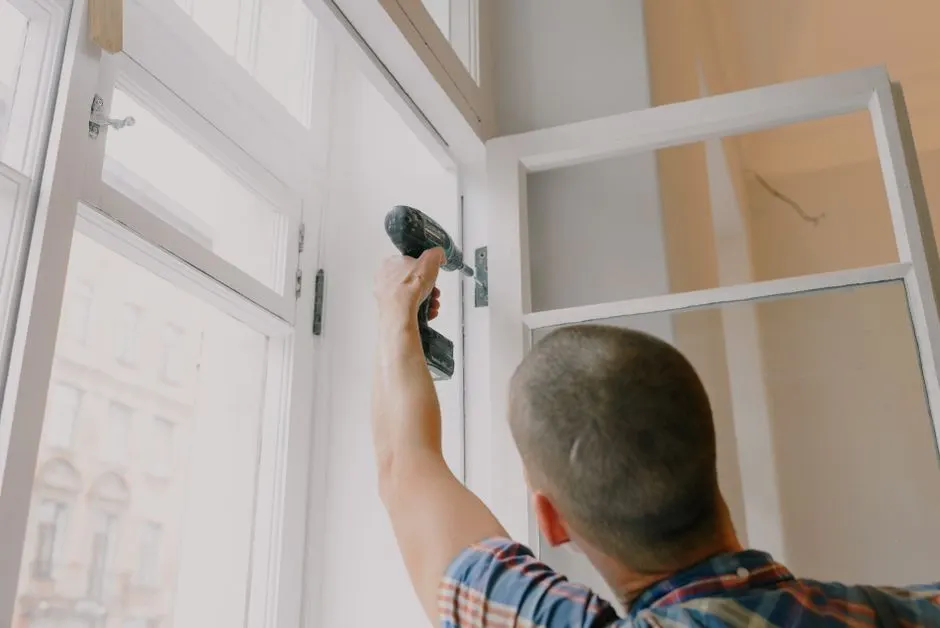
Energy-efficient replacement windows improve indoor comfort during hot summers by blocking radiant heat before it enters your home, sealing air leaks that let cooled air escape, and reducing the greenhouse effect that builds up behind single-pane glass. In a Los Angeles home with older windows, that combination can drop indoor temperatures by 5 to 12 degrees on a 95-degree afternoon and cut cooling costs by 20 to 35 percent. This post breaks down exactly how that works, which glass packages perform best in our climate, what replacement costs in 2026, and the mistakes that quietly cancel out the benefits.
Why Los Angeles Summers Overwhelm Old Windows
Los Angeles summers overwhelm old windows because most homes here were built before 1980, when single-pane aluminum frames were the standard, and single-pane glass has almost no resistance to radiant heat. On a 95-degree day in the San Fernando Valley, the surface of a west-facing single-pane window can hit 110 to 120 degrees. That glass then radiates heat straight into your living room for four to six hours every afternoon.
Aluminum frames make it worse. Aluminum conducts heat roughly 1,000 times faster than vinyl or fiberglass, so the frame itself becomes a hot strip running around the edge of every window. You feel it when you sit near the glass. Your air conditioner feels it too, running longer cycles to hold the thermostat at 76.
Then there is the leak problem. Original 1950s and 1960s wood and aluminum windows in neighborhoods like Sherman Oaks Window Replacement Contractor territory typically leak 15 to 25 percent of your conditioned air through worn weatherstripping, dried-out glazing, and gaps at the sill. That is air you paid to cool, escaping through the frame.
How Do Energy-Efficient Windows Help With Hot Los Angeles Summers?
Energy-efficient windows help with hot Los Angeles summers through three mechanisms working at once: low-emissivity coatings that reflect infrared heat, inert gas fills that slow heat conduction through the glass, and multi-chamber frames with thermal breaks that stop heat from traveling around the glass. Each one addresses a different path that heat uses to get inside.
Here is the short version of what each component does:
- Low-E coating - a microscopic metallic layer on the glass that reflects 40 to 70 percent of the sun's infrared energy back outside before it becomes heat in your room.
- Argon or krypton gas fill - a denser gas between the panes that cuts conductive heat transfer by roughly 30 percent compared to plain air.
- Double or triple glazing - a 1/2-inch to 5/8-inch air space that creates a thermal barrier, typically rated at U-factor 0.25 to 0.30 versus 1.0 or higher for single pane.
- Thermally broken frames - vinyl, fiberglass, or composite frames with a barrier between the interior and exterior surfaces so heat cannot conduct straight through the frame.
- Warm-edge spacers - the strip holding the panes apart, engineered to reduce condensation and edge heat loss.
Energy efficient windows hot summers Los Angeles homeowners buy are not just thicker glass. They are a system. A good window with poor installation still leaks. A great installation with the wrong glass for a west-facing wall still cooks the room. You need both.
What Are the Best Energy-Efficient Windows for Los Angeles CA?
The best energy-efficient windows for Los Angeles CA are double-pane units with a low-E coating rated for solar heat gain, argon fill, and a thermally broken vinyl or fiberglass frame - because our climate is cooling-dominated, not heating-dominated. That is the opposite of what a window salesperson from a cold-weather market will recommend.
Look for these numbers on the NFRC label:
- U-factor 0.30 or lower - measures how fast heat conducts through the whole window. Lower is better.
- Solar Heat Gain Coefficient (SHGC) 0.25 to 0.35 - measures how much solar heat passes through. For west and south facing windows in the Valley, aim for the low end.
- Visible Transmittance (VT) 0.40 or higher - keeps the room bright without sacrificing heat rejection.
- Air Leakage (AL) 0.3 cfm/ft² or lower - the tighter the better.
For frame material, vinyl and fiberglass both outperform aluminum in our heat. Vinyl is the value pick - we install a lot of Vinyl Window Replacement Los Angeles CA because it holds up to UV without warping and costs less than fiberglass. Fiberglass is the premium pick for larger openings or where you want a narrower frame profile. Wood is beautiful but requires repainting every 3 to 5 years in our sun, and aluminum without a thermal break is a non-starter for energy performance.
For window style: casement and awning windows seal tighter than double hung because the sash presses against the frame when you crank it closed. If you have a west-facing wall that takes the brunt of the afternoon sun, casement is worth the upgrade. If you want the classic look and easier cleaning, double hung is fine as long as the weatherstripping is quality.
Do Energy-Efficient Windows Reduce Cooling Costs in Los Angeles?
Yes - energy-efficient windows reduce cooling costs in Los Angeles by 20 to 35 percent in a typical single-family home, according to utility program data for our climate zone. On a $250 summer electric bill, that is $50 to $87 back in your pocket every month from June through September.
The savings come from two places. First, less heat entering means your AC runs shorter cycles. A 3-ton central unit draws roughly 3,500 watts while running; cutting runtime by 25 percent saves about 2.6 kilowatt-hours per cooling hour. Second, the tighter envelope means less conditioned air leaking out, so the system does not have to re-cool air you already paid for.
We see the biggest jumps in homes with west or southwest facing walls and no exterior shade. A 1962 ranch house in Woodland Hills Window Replacement Contractor territory with original aluminum sliders is the classic case - those homes routinely see $80 to $120 per month in summer savings after a full window replacement.
The savings are smaller if you already have dual-pane windows from the 1990s. Those units have some low-E but usually no argon and often degraded seals. Replacing them can still help, but the payback is longer - 8 to 12 years instead of 4 to 7.
How Much Do Energy-Efficient Windows Cost in Los Angeles?
Typical 2026 pricing for energy-efficient window replacement in Los Angeles runs $650 to $1,400 per window installed, depending on size, frame material, glass package, and whether the opening needs reframing. A whole-house job on a 1,800-square-foot home with 14 windows usually lands between $10,000 and $18,000.
Here is how the numbers break down by tier:
- Standard double-pane vinyl, low-E, argon - $650 to $900 per window installed. The workhorse package for most Los Angeles homes.
- Premium vinyl or fiberglass, better glass, upgraded hardware - $900 to $1,200 per window. Worth it for west-facing walls and larger openings.
- Triple pane or specialty glass (impact, acoustic, tinted) - $1,200 to $1,800+ per window. Common near freeways and in fire-rated zones.
Two variables swing the price more than anything else. First, the installation method: a Retrofit Window Replacement Los Angeles CA fits a new unit into the existing frame and costs less; a full frame replacement removes the entire window down to the rough opening and costs 20 to 40 percent more. Second, the window count and access - second-story windows, stucco repair, and interior trim work all add labor.
Rebates help. SoCalGas and LADWP periodically offer $2 to $4 per square foot of window area for qualifying upgrades, and the federal 25C tax credit covers 30 percent of product cost up to $600 per year for windows meeting ENERGY STAR Most Efficient criteria. Ask us to check current programs when we quote - the rules shift annually.
Common Mistakes We See on Los Angeles Window Projects
The most common mistake we see is buying on U-factor alone and ignoring SHGC - in Los Angeles, solar heat gain matters more than conductive heat loss. A window with a great U-factor but SHGC of 0.50 will still cook a west-facing bedroom.
Other mistakes that quietly cancel out the benefits:
- Skipping the air-sealing step. Even a top-tier window leaks if the rough opening is not sealed with low-expansion foam and proper flashing. We spend as much time on the opening as on the unit.
- Mixing frame materials on the same elevation. A vinyl window next to an aluminum one expands and contracts at different rates, and the seal between them fails within a few years.
- Choosing clear glass because it looks brighter. Clear glass lets in 70 to 80 percent of solar heat. Low-E looks nearly identical and blocks most of it.
- Ignoring interior shade and exterior shade. Awnings, trees, and solar screens cut heat load before it ever reaches the glass. Windows and shading work together.
- Hiring on price alone. A $400-per-window quote usually means no permit, no flashing, and no warranty on labor. The cheap job costs more in five years.
One more: not checking the NFRC label on the actual unit delivered. Manufacturers sometimes substitute a different glass package when stock runs short. Verify the label matches the quote before installation starts.
When to Call a Professional
Call a professional when you see fogging between the panes, condensation on the interior glass on a dry day, difficulty opening or closing the sash, or a visible gap at the frame. Those are signs the seal has failed and the unit is no longer performing - no amount of caulk fixes a broken IGU.
Also call us if your summer electric bill has climbed more than 20 percent year over year without a rate change, or if you can feel heat radiating off the glass when you stand a foot away. Both point to window performance, not your AC.
American Reliable Windows & Doors handles energy-efficient window replacement across the San Fernando Valley and greater Los Angeles. We measure, we quote the actual glass package, and we install with the air-sealing and flashing details that make the ratings real. If you are not sure whether your windows are the problem, we will tell you straight - sometimes the fix is shade or insulation, not new glass.
Frequently Asked Questions
How do energy efficient windows help with hot Los Angeles summers?
They block radiant heat with low-E coatings, slow conduction with argon gas and double glazing, and seal air leaks with tight frames and weatherstripping. Together these cut indoor heat gain by 40 to 60 percent on a west-facing wall and reduce AC runtime by roughly 25 percent.
What are the best energy efficient windows for Los Angeles CA?
Double-pane vinyl or fiberglass with low-E glass, argon fill, U-factor 0.30 or lower, and SHGC between 0.25 and 0.35. Casement and awning styles seal tighter than double hung, which matters most on west and south facing walls.
Do energy efficient windows reduce cooling costs in Los Angeles?
Yes - typically 20 to 35 percent on summer cooling, or $50 to $87 per month on a $250 bill. The biggest savings come in homes with original single-pane windows and unshaded west-facing walls.
How much do energy efficient windows cost in Los Angeles?
In 2026, expect $650 to $1,400 per window installed, or $10,000 to $18,000 for a typical 14-window home. Retrofit installation costs less than full frame; triple pane and impact glass cost more.
How long does window replacement take?
A single window takes 1 to 2 hours. A full-house job of 12 to 16 windows usually runs 2 to 4 days, plus a day for stucco or trim repair if the openings need reframing.
Get Help With Window Replacement Contractor in Los Angeles
If your rooms are running hot and your AC cannot keep up, new windows are one of the highest-return upgrades you can make on a Los Angeles home. We will measure your openings, recommend the right glass package for each elevation, and give you a written quote before any work starts.
Call American Reliable Windows & Doors at +1 (747) 298-4287 to schedule a free in-home evaluation.