
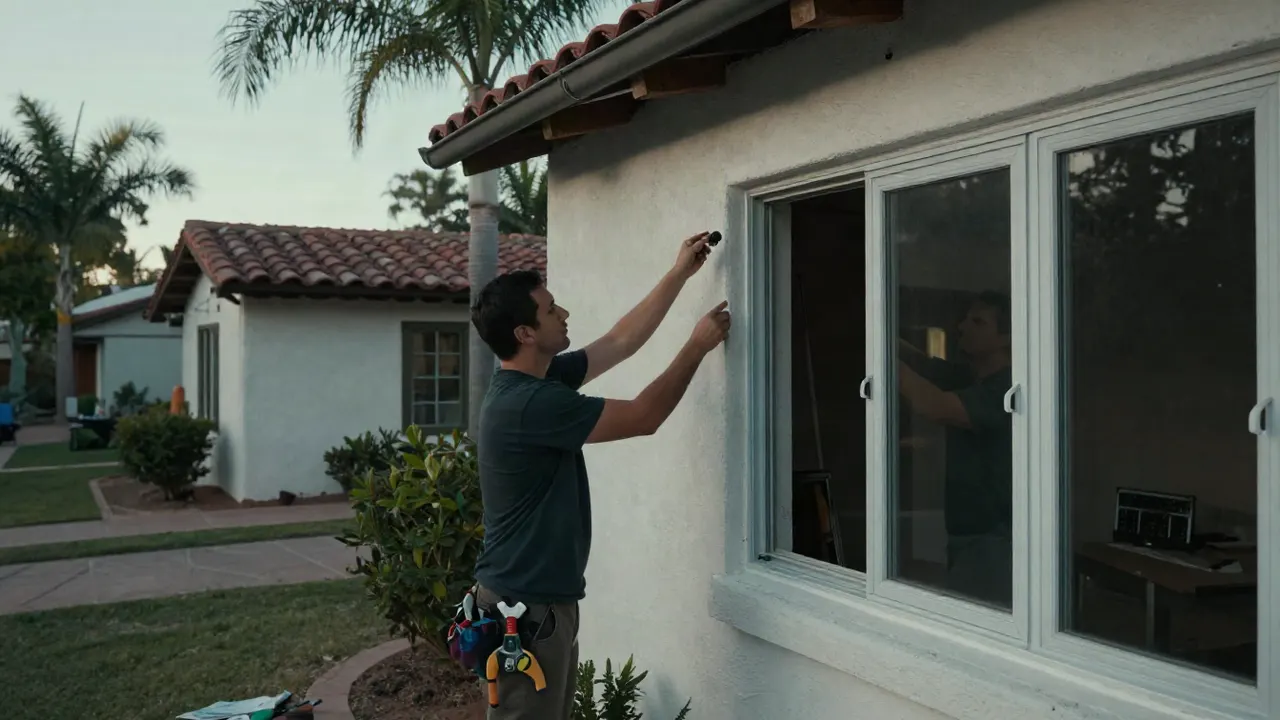
If your window frames are soft, cracked, or visibly out of square, you need full frame window replacement - not inserts. Insert windows only work when the existing frame is solid and plumb; once the wood has rotted or the opening has shifted, an insert just covers up a structural problem that will keep getting worse.
We're American Reliable Windows & Doors, and we've pulled enough failed inserts out of Los Angeles homes to know the difference on sight. This guide walks through the specific signs that mean full frame is your only real option, how the two approaches differ, and what the work actually involves in 2026.
What Full Frame vs Insert Window Replacement in Los Angeles Actually Means
Full frame vs insert window replacement in Los Angeles is the difference between replacing the entire window unit - frame, sash, sill, and trim - versus sliding a new sash into the frame that's already there. An insert (also called a pocket replacement) reuses your existing jamb and stops at the interior trim. A full frame replacement removes everything down to the rough opening and rebuilds from there.
Insert windows cost less and go in faster. Full frame windows cost more and take longer, but they're the only option when the frame itself is the problem. That's the whole decision in two sentences.
Los Angeles homes complicate this. The housing stock here runs from 1920s bungalows in North Hollywood Window Replacement Contractor territory to 1960s tract homes in the Valley to newer builds in Woodland Hills. Each era has its own failure pattern, and each one tells you something different about whether an insert will hold.
How Do I Know If I Need Full Frame Window Replacement in Los Angeles?
You need full frame window replacement in Los Angeles when the frame itself has failed - rot, water damage, cracks, or movement - because insert windows cannot fix a bad frame. The signs are physical, and most of them are visible without pulling anything apart.
Walk around your house and check for these:
- Soft or spongy wood when you press a screwdriver into the sill or jamb. If it sinks, the wood is gone.
- Visible rot - dark, crumbly, or discolored wood around the frame, especially at the bottom corners.
- Cracks in the frame or wall near the window opening.
- Windows that stick or won't close no matter how you adjust them. That's usually a sign the opening has racked.
- Daylight or drafts coming through the frame itself, not just around the sash.
- Water stains on the interior trim or drywall below the window.
Any one of those means an insert is a band-aid. Two or more means the frame has to come out.
Why Los Angeles Weather Accelerates Frame Failure
We don't get hard freezes here, but we get something worse for wood: intense UV, dry summers, and the occasional heavy rain season that dumps months of water in a few weeks. That cycle - bake, dry, soak - opens up joints and lets water sit in sills where it can't evaporate.
Homes in Sylmar Window Replacement Contractor and other foothill areas also deal with wind-driven dust and debris that works into frame gaps. Once water gets in and can't get out, rot starts. By the time you see it inside, it's been spreading for a year or more.
The Signs That Rule Out Insert Windows
Insert windows require a sound, square, plumb frame. If any of the following are true, you're past the point where an insert makes sense.
- The frame is out of square by more than about 1/4 inch. Inserts are built to fit the opening as-is. If the opening has moved, the insert won't seal, and you'll get air and water infiltration no matter how much caulk goes on.
- The sill is rotted or the jamb has soft spots. You can't anchor an insert to wood that won't hold a screw.
- There's water damage to the surrounding wall or trim. That has to be opened up and repaired, which means the frame is coming out anyway.
- You're changing the window size or configuration. Going from a single hung to a slider, or widening an opening, requires full frame work.
- The existing frame is aluminum or steel from an older install. These often have thermal bridging issues and no proper flashing, and inserts on top of them just inherit the problem.
- You want to add proper flashing and weatherproofing. Inserts don't address the rough opening, so you can't fix the water management behind the frame.
If you're seeing three or more of these, stop pricing inserts. They won't solve your problem.
Insert Window Limitations Los Angeles Homeowners Run Into
Insert window limitations Los Angeles homeowners run into are mostly about what inserts can't do. They can't fix a bad frame, they can't improve the rough opening, and they can't correct a window that was installed wrong the first time.
Here's what we see in the field:
- Reduced glass area. An insert sits inside the existing frame, so the new sash is smaller than the old one. You lose visible glass - usually 1 to 2 inches on each side.
- No fix for water intrusion. If water is getting behind the frame, an insert doesn't stop it. It just hides the damage until it gets worse.
- No correction for out-of-square openings. The insert follows the opening, square or not.
- Shorter lifespan on a compromised frame. A good insert on a solid frame can last 20 years. On a failing frame, you're lucky to get 10 before the whole thing has to come out.
- Limited options for trim and finish. Inserts work with the existing interior and exterior trim. If you want new trim or a different look, that's full frame work.
None of that makes inserts bad. They're the right call when the frame is solid. They're the wrong call when it isn't.
Full Frame Window Replacement Benefits Los Angeles Homeowners See
Full frame window replacement benefits Los Angeles homeowners see go beyond a tighter seal. You get a corrected opening, new flashing, new trim, and a window that's properly anchored to the structure - which is what actually keeps water out and air in.
Specifics:
- Proper water management. New flashing and sill pans direct water away from the opening. That's the single biggest long-term difference.
- Corrected square and plumb. The opening is rebuilt, so the new window operates the way it should.
- Full glass area. No lost inches. You get the window size you paid for.
- New interior and exterior trim. You can match the home's style or update it.
- Better energy performance. With the frame and flashing done right, you're not fighting air leaks from the old install.
- Longer service life. A full frame install on a repaired opening typically lasts 25 to 30 years with normal maintenance.
For a lot of older homes, this is also the moment to upgrade the window type itself - swapping tired single hungs for Double Hung Window Replacement Los Angeles CA units that tilt in for cleaning, or going to Vinyl Window Replacement Los Angeles CA for lower maintenance and better thermal performance.
What to Watch Out For
The biggest mistake we see is homeowners getting quoted for inserts when they actually need full frame. It usually happens because the salesperson didn't pull the trim or check the sill - they measured the opening and wrote a number.
Other things to watch:
- Quotes that don't include frame repair. If the frame is rotted, that repair has to be in the scope. A quote that ignores it will grow once work starts.
- No mention of flashing. Full frame work without new flashing is a wasted opportunity. Ask how water will be managed at the sill and head.
- Permits. Most full frame replacements in Los Angeles require a permit. Inserts often don't. If a contractor says no permit is needed for full frame, ask why.
- Stucco and siding repair. Removing a full frame window disturbs the exterior finish. That repair should be part of the conversation, not a surprise.
- Interior trim. Full frame work means new interior casing. Decide up front whether you're matching existing trim or replacing it.
Get the scope in writing before you sign. The difference between a $900 insert and a $2,400 full frame install is real, and it should be spelled out line by line.
When to Call a Professional
Call a professional when you can't tell whether the frame is sound. That's the honest answer. Rot and movement aren't always visible from the inside, and a contractor who knows what to look for can tell you in 15 minutes whether you're an insert candidate or a full frame job.
We do this every day. Our team pulls the trim, checks the sill, and gives you a straight answer about which approach your home actually needs - no upsell, no guessing. If an insert will work, we'll tell you. If it won't, we'll show you why.
American Reliable Windows & Doors handles both Insert Window Replacement Los Angeles CA and Full Frame Window Replacement Los Angeles CA, so we're not steering you toward one or the other. We're matching the method to the condition of your home.
Frequently Asked Questions
How do I know if I need full frame window replacement in Los Angeles?
You need full frame replacement if the frame is rotted, cracked, out of square by more than 1/4 inch, or showing water damage. If the wood is soft when you press it, or the window won't close properly no matter how you adjust it, an insert won't fix it. Get an inspection before you buy anything.
What is the difference between full frame and insert windows in Los Angeles CA?
Full frame replaces the entire window unit - frame, sash, sill, and trim - down to the rough opening. An insert reuses the existing frame and slides a new sash into it. Full frame costs more and takes longer, but it's the only option when the frame itself has failed.
Are insert windows enough for my Los Angeles home?
Insert windows are enough if your existing frame is solid, square, and plumb, and there's no rot or water damage. If your home was built before 1980 and still has original wood frames, there's a good chance the frame has issues that rule out inserts. Have it checked.
When should I choose full frame window replacement in Los Angeles?
Choose full frame when the frame is damaged, when the opening is out of square, when you're changing window size or type, or when you want new flashing and trim. If you're already opening up the wall to fix water damage, full frame is the logical choice.
How much does full frame window replacement cost in Los Angeles in 2026?
Typical 2026 pricing in Los Angeles runs $1,200 to $2,800 per window for full frame replacement, depending on size, material, and whether frame repair is needed. Inserts run $600 to $1,400 per window. Full frame costs more because it includes new trim, flashing, and often stucco repair.
Get Help with Window Replacement Contractor in Los Angeles
If you're not sure whether your home needs full frame or insert windows, we'll come out and tell you straight. We serve homeowners across Los Angeles and the San Fernando Valley, and we handle both approaches.
Call American Reliable Windows & Doors at +1 (747) 298-4287 to schedule an inspection and get a clear recommendation.