
Fiberglass windows deliver better long-term value in Los Angeles if you plan to keep the house 15 years or longer, because their frames resist UV, heat, and expansion without the sagging and yellowing that eventually catch up to vinyl. Vinyl wins on long-term value if you sell within 10 years or you are replacing a large number of windows on a fixed budget, because the upfront savings of $300 to $700 per opening usually outweigh the durability gap over that shorter window. Vinyl vs fiberglass windows Los Angeles homeowners ask us about every week, and the honest answer almost always comes down to how long you plan to own the house and how much direct sun the windows take.
We install both materials across the San Fernando Valley and the LA basin, so we have watched how each one holds up after five, ten, and fifteen summers. Below we break down the real 2026 costs, the durability differences that matter in Southern California, and the specific situations where one material clearly beats the other.
The Short Answer: Long-Term Value Depends on How Long You Keep the House
Long-term value in Los Angeles is a math problem, not a brand preference. Vinyl costs less today; fiberglass costs less per year of service if you keep it long enough. A standard vinyl window runs $450 to $900 installed per opening in 2026, while a comparable fiberglass window runs $800 to $1,500. That gap of roughly $350 to $600 per window is the entire decision.
If you replace 12 windows, vinyl saves you $4,200 to $7,200 upfront. Fiberglass, on the other hand, holds its shape and finish for 25 to 30 years in our climate, while vinyl in full afternoon sun often starts to show fading, warping, or seal failure around year 12 to 18. Divide the cost by the years of service and fiberglass comes out ahead on a 20-year horizon; vinyl comes out ahead on a 10-year horizon.
There is also a resale angle. Buyers in Sherman Oaks, Encino, and Studio City increasingly recognize fiberglass frames as a premium feature, and a documented fiberglass installation can support a higher asking price. Vinyl, done well, still reads as a clean, modern upgrade. Neither material is a mistake - they just pay you back on different timelines.
Vinyl vs. Fiberglass Windows in Los Angeles: How the Two Materials Actually Differ
Vinyl vs fiberglass window replacement Los Angeles CA is fundamentally a comparison of PVC plastic against pultruded glass fibers bonded in resin. Vinyl is extruded PVC, hollow in most residential profiles, and often reinforced with a metal or composite insert in the sash and frame. Fiberglass is a pultruded composite - glass strands pulled through resin - which makes it denser, stiffer, and far less prone to thermal movement.
That structural difference shows up in three places you can actually see and feel:
- Frame thickness: Fiberglass frames are typically 30 to 40 percent thinner than vinyl for the same structural rating, which means more visible glass and better daylight in tight openings.
- Color stability: Fiberglass can be factory-finished in dark bronze, black, or custom colors that hold up in direct sun. Vinyl is limited mostly to white, beige, and a few laminated exterior colors, because dark vinyl absorbs too much heat and warps.
- Expansion and contraction: Vinyl moves roughly three times as much as fiberglass across a 40-degree temperature swing, which is why cheap vinyl windows in west-facing walls eventually lose their weatherstripping seal.
Both materials accept the same Low-E glass packages, argon fill, and dual-pane or triple-pane configurations, so the energy performance difference is mostly in the frame and the installation quality, not the glass itself.
Vinyl vs. Fiberglass Window Cost Comparison Los Angeles (2026 Pricing)
Vinyl vs fiberglass window cost Los Angeles numbers for 2026 land in these ranges for a standard dual-pane, Low-E, argon-filled unit installed by a licensed contractor:
- Vinyl, standard sizes (up to 36" x 60"): $450 to $750 per window installed.
- Vinyl, large or custom sizes: $700 to $1,100 per window installed.
- Fiberglass, standard sizes: $800 to $1,200 per window installed.
- Fiberglass, large or custom sizes: $1,100 to $1,800 per window installed.
- Full-frame vs. retrofit install: Full-frame adds $150 to $400 per opening in labor and trim; retrofit or insert installs keep the existing frame and cost less.
A typical three-bedroom Los Angeles home with 14 windows runs $7,000 to $11,000 in vinyl and $12,000 to $19,000 in fiberglass, installed. Those numbers include removal, disposal, flashing, and interior trim on a standard retrofit. Add 10 to 20 percent if the home is in a 1920s-to-1940s bungalow with original wood frames that need repair before the new units go in.
Where the money goes matters as much as the total. On a Retrofit Window Replacement Los Angeles CA, the existing frame stays in the wall and the new sash and glass drop in, which keeps labor down and preserves original interior trim. On a Full Frame Window Replacement Los Angeles CA, we pull the entire window down to the rough opening, which is the right call when the old frame is rotted, out of square, or leaking - and it is the only way to properly air-seal and flash a window that has been letting in water.
Vinyl vs. Fiberglass Window Durability Los Angeles: Heat, UV, and Salty Air
Vinyl vs fiberglass window durability Los Angeles comes down to how each material handles 100-degree summer afternoons, year-round UV, and - for homes west of the 405 - salt air. Fiberglass is the more durable material in every one of those conditions. It does not warp at 120 degrees, it does not chalk or fade when the finish is factory-applied, and it does not corrode in coastal air.
Vinyl is not fragile, but it has limits. In full west or south exposure, a standard vinyl frame can reach 140 to 160 degrees on the surface, which is close to the softening point of some lower-grade PVC. That is why we spec heat-resistant vinyl profiles with reinforced sashes for any window facing the afternoon sun, and why we steer homeowners toward fiberglass when the window is large, dark-colored, or under a low overhang that traps heat.
Hardware and seals age faster than frames in both materials. In our climate, weatherstripping and glazing gaskets typically need attention every 8 to 12 years, and balance shoes or rollers on sliding and double-hung units every 10 to 15. Fiberglass frames usually outlast two or three sets of seals; vinyl frames often need replacement around the same time the second set of seals goes.
If your home is in an older neighborhood with original single-pane wood windows - common in Window Replacement Contractor in Sherman Oaks, CA and the surrounding valley streets - the frame condition often decides the material more than the budget does. Replacing 90-year-old wood sashes with fiberglass keeps the original look and adds decades of service; going vinyl is faster and cheaper but reads as a more modern swap.
Which Is Better, Vinyl or Fiberglass Windows in Los Angeles?
Which is better, vinyl or fiberglass windows in Los Angeles depends on four factors: how long you will own the home, how much direct sun the windows get, whether your HOA or historic district limits frame color and profile, and your upfront budget. Fiberglass is the better window. Vinyl is often the better purchase.
Choose fiberglass if any of these apply:
- You plan to stay 15 years or more and want to replace the windows once.
- The windows face west or south with no shade, or sit under a low eave that traps heat.
- You want dark exterior colors - black, bronze, or a custom match.
- You live within a mile or two of the coast and want a frame that ignores salt air.
- You are replacing very large or unusually shaped windows where frame stiffness matters.
Choose vinyl if these describe your situation:
- You are selling within 5 to 10 years and want the best return on the smallest spend.
- You are replacing 15 or more windows and the budget is the deciding factor.
- Your windows are shaded most of the day by trees, a porch, or a neighboring building.
- You want white or beige frames, which is what most HOAs in the Valley approve anyway.
We install both materials, and we will tell you plainly which one fits your house. If you want to see how a full replacement is scoped and priced, our Window Replacement Contractor Los Angeles, CA page walks through the process from measurement to final inspection.
What to Watch Out For Before You Sign a Window Contract
The biggest long-term value killer in Los Angeles window replacement is not the material - it is a bad installation. A $1,200 fiberglass window installed without proper flashing and back-damming will leak within three years. A $500 vinyl window installed correctly will stay dry for 20. Watch for these specific problems:
- No mention of flashing or sill pan. Every window in an exterior wall needs a sill pan and head flashing. If the proposal does not list them, ask why.
- Stucco and siding repair left off the quote. In LA, most homes are stucco. Removing a window damages the stucco around the opening, and patching it properly is real labor. A quote that ignores it will grow by $200 to $500 per window once work starts.
- "Same-day install" on a full-frame job. A true full-frame replacement takes 2 to 4 hours per window with proper flashing, insulation, and trim. If a crew promises 15 full-frame windows in one day, corners are being cut.
- No U-factor or SHGC numbers on the quote. In our climate, you want a U-factor of 0.30 or lower and an SHGC between 0.23 and 0.40 depending on orientation. If the quote does not state them, you cannot compare bids.
- Pressure to sign the same day. Window pricing does not change overnight. A legitimate contractor will let you sleep on it.
One more: confirm the installer is licensed and carries workers' comp. Window installation involves ladders, glass, and stucco cutting. If a crew member is hurt on your property and the contractor is uninsured, that becomes your problem.
When to Call a Professional
Call a professional when you see fog between the panes, a frame that has warped enough to break the seal, water staining on the interior sill, or a window that no longer opens and closes smoothly. Those are signs the unit has failed, not just aged, and no amount of caulk or weatherstripping will fix them.
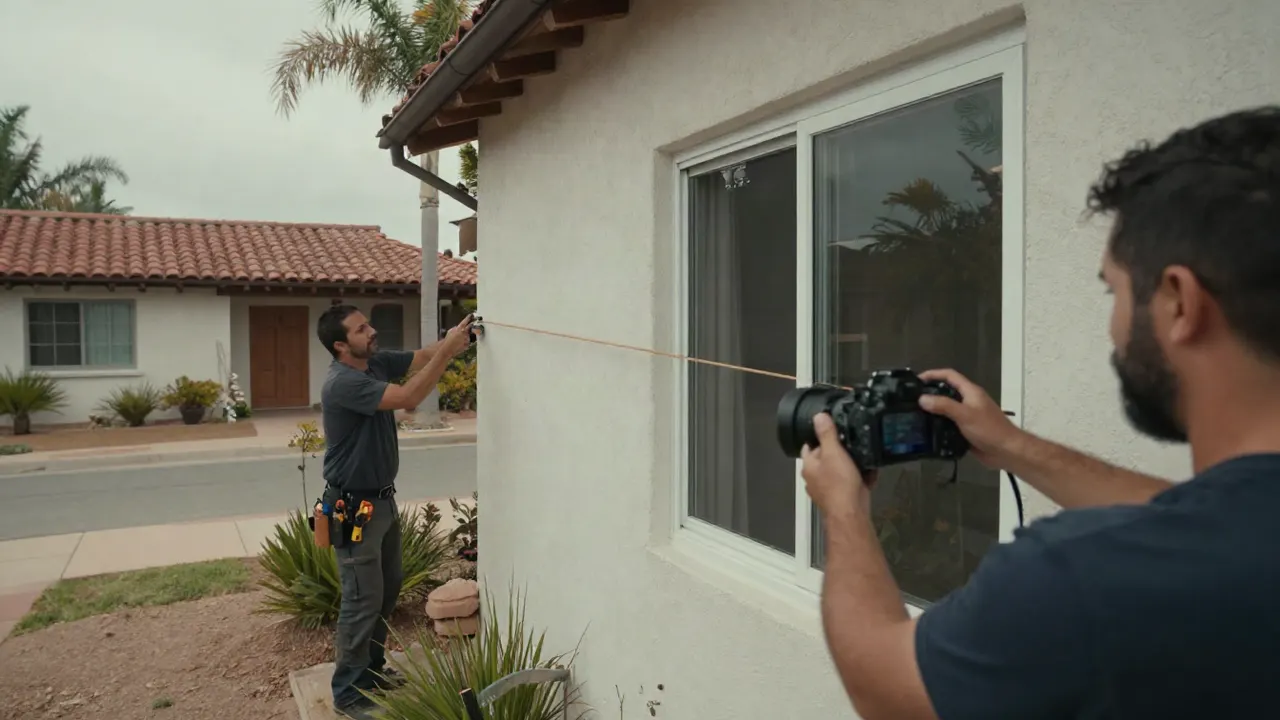
Also call us before you order windows online or through a big-box store. We measure every opening in person, check the rough opening for rot and square, and match the new unit to the existing wall depth so the trim sits flush. That measurement step is where most DIY window projects go wrong, and it is the difference between a 25-year window and a 5-year leak.
American Reliable Windows & Doors installs vinyl and fiberglass replacement windows across Los Angeles and the San Fernando Valley. We handle the measurement, the permit if one is required, the stucco patch, and the final walkthrough. You get one crew, one point of contact, and a written price before we start.
Frequently Asked Questions
Which is better, vinyl or fiberglass windows in Los Angeles?
Fiberglass is the better window for Los Angeles heat, UV, and coastal air, lasting 25 to 30 years versus 12 to 18 for vinyl in full sun. Vinyl is the better buy if you sell within 10 years, since it costs $350 to $600 less per window installed and still performs well in shaded or north-facing openings.
What is the difference between vinyl and fiberglass windows in Los Angeles CA?
Vinyl frames are extruded PVC; fiberglass frames are pultruded glass-and-resin composite. Fiberglass is stiffer, expands less in heat, accepts dark colors, and holds its finish longer. Vinyl costs less, comes mostly in white and beige, and needs reinforced profiles in west-facing walls to resist warping.
Are vinyl windows better than fiberglass in Los Angeles?
Not in durability - fiberglass wins that comparison. Vinyl is better only on upfront cost and short-term payback. For a house you will keep 15-plus years, especially with west or south exposure, fiberglass delivers lower cost per year of service and fewer replacements over the life of the home.
Which window material offers better long-term value in Los Angeles?
Fiberglass offers better long-term value over a 20-year horizon, at roughly $40 to $60 per year of service versus $35 to $55 for vinyl when you account for one vinyl replacement cycle. Vinyl wins over a 10-year horizon because you avoid the second installation entirely.
How much does vinyl vs fiberglass window replacement cost in Los Angeles CA?
In 2026, vinyl runs $450 to $1,100 per window installed and fiberglass runs $800 to $1,800, depending on size and whether it is a retrofit or full-frame job. A typical 14-window home lands at $7,000 to $11,000 for vinyl and $12,000 to $19,000 for fiberglass.
Get Help with Window Replacement Contractor in Los Angeles
We measure, we quote in writing, and we install vinyl or fiberglass windows built for Southern California heat and sun. If you are weighing vinyl vs fiberglass windows Los Angeles pricing for your own home, call us and we will tell you which material actually fits your walls, your sun exposure, and your timeline.
Call American Reliable Windows & Doors at +1 (747) 298-4287 to schedule a free in-home measurement and a written quote.